About 15 years ago, we found ourselves seriously questioning the direction the beef seedstock industry was taking. The prevailing mindset seemed to be that “bigger is better” when it came to cattle frame size. But as we looked at our breeding cows, we had to ask: Were they getting too big? Were we seeing reduced fertility and calving ease? Most importantly, was this approach actually reducing our profitability?
Our conclusion was a resounding yes.
- Calving Ease: Prioritizing unassisted, stress-free births to maximize live calf percentages and reduce labor costs.
- High Fertility: Breeding highly fertile females that conceive early and consistently cycle on a 100% grass diet.
- Moderate Frame Size: Shifting away from oversized cattle to efficient, smaller-framed females with lower nutritional maintenance requirements.
- Flawless Grass-Fed Condition: Selecting for cattle that naturally maintain body condition, muscling, and thickness without the need for grain or grain-byproduct supplementation.
- Docile Temperament: Ensuring low-stress handling, which dramatically improves herd management, animal welfare, and ultimate meat quality.
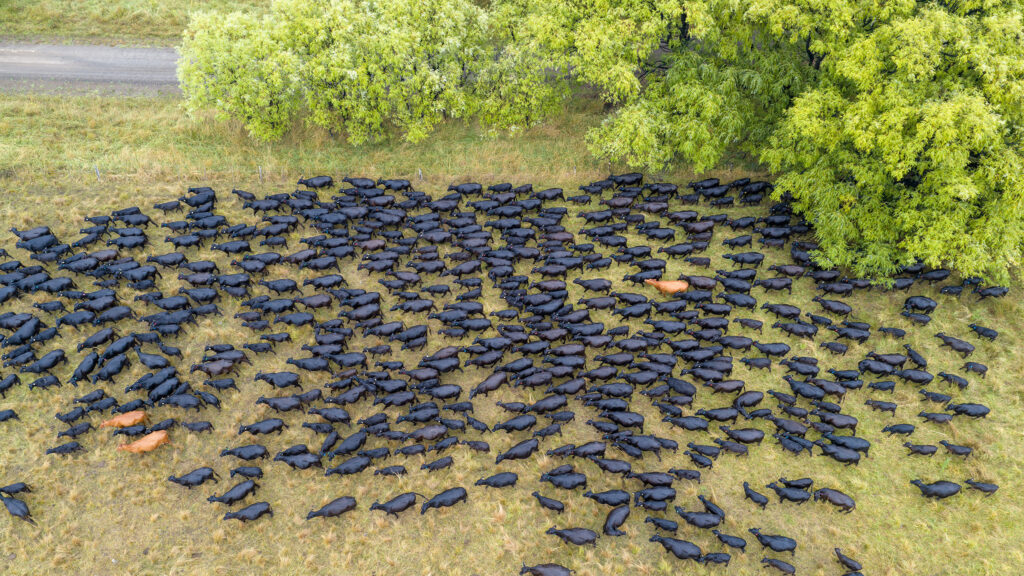
We realized that to improve our bottom line—and to help commercial beef cattle producers do the same—we needed a completely new strategy. We decided to focus on calving ease, improving fertility, and reducing the overall size of our breeding females to improve their resilience in a grass-only environment.
After extensive research, we introduced the grass-based genetics of the Pharo Cattle Company. Over the next eight years, we completely transformed the genetic profile of our females. Today, our focus remains on “BRED IN, not Fed In.” We don’t just look at kilograms of beef per animal; we look at the kilograms of beef produced per hectare. By focusing on fertility, muscling, temperament, and structural soundness, we breed cattle that truly work in commercial grass-fed conditions. Profit is the only “trait” we want to maximize.